
Artificial Intelligence (AI) is no longer just an add-on in digital marketing — in 2026, it has become the backbone of every major marketing strategy. From hyper-personalised ads to AI-driven content creation, businesses are using intelligent algorithms to reach customers faster, cheaper, and more accurately than ever before.
In this blog, let’s explore how AI is transforming digital marketing in 2026, with real use cases you can apply today.
1. Hyper-Personalisation Becomes the Default
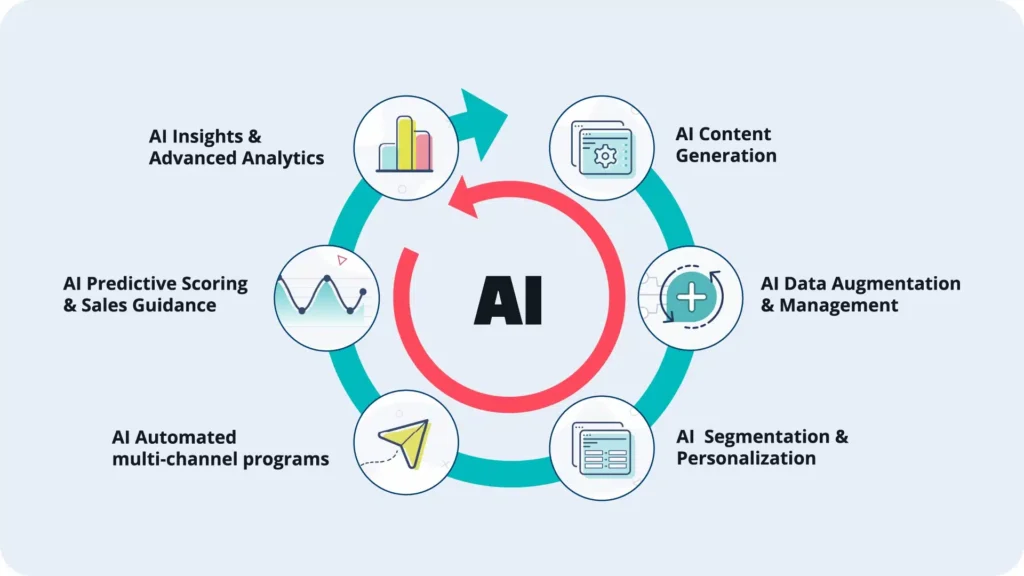
AI allows brands to deliver marketing messages that feel tailor-made for each user.
What’s new in 2026?
- Ads are now customised based on emotion, not just demographics.
- Customer journey maps update in real-time for each user.
- Brands use AI to predict what customers want before they search for it.
Examples
- E-commerce stores showing products based on your mood, detected through interaction patterns.
- Netflix-style personalised recommendations used by almost every website.
2. AI-Generated Content Gets More Human
With advanced language models, content creation in 2026 is faster and more accurate.
AI helps create:
- Blogs
- Social media posts
- Product descriptions
- Video scripts
- Email sequences
Why it matters
- Saves time and cost
- Ensures consistent brand voice
- Helps produce large volumes of high-quality content
But human creativity still matters — brands that blend AI + human storytelling win big.
3. Search Is Shifting From Keywords to Intent
SEO has changed dramatically.
In 2026, Google focuses on:
- Search intent
- User experience
- AI-generated summaries
- Voice + image search
What marketers need to do:
- Write helpful, conversational content
- Optimise for voice search queries
- Create content that answers user questions instantly
- Add more visual and interactive content
4. AI in Social Media: Smarter, Faster, Viral
AI tools now analyse millions of posts daily to find what will trend next.
AI helps with:
- Predicting which post format will perform best
- Suggesting trending audio for reels
- Auto-editing videos
- Posting at optimal times
- Handling comments via smart chatbots
New in 2026:
- Emotion-based content scoring
- AI-powered “virality heatmaps”
- Fully automated social media calendars
5. Predictive Analytics Changes How Businesses Sell
AI doesn’t just analyse the present — it predicts the future.
Companies can now forecast:
- Purchase behaviour
- Product demand
- Customer churn
- Best-selling items
- Ad performance
Predictive analytics helps brands reduce risk and improve ROI by showing what is most likely to work before spending money.
6. AI-Powered Ads Deliver Higher ROI
Advertising platforms like Meta, Google, and TikTok now depend heavily on AI.
What’s new?
- Fully automated campaign structures
- Real-time ad optimisation
- Smart targeting using behavioural data
- Adaptive creatives that change automatically
AI ads in 2026 are more efficient because they learn faster and fix mistakes instantly.
7. Chatbots Have Become More Human-Like
In 2026, AI chatbots feel almost like talking to a real support agent.
They can:
- Answer complex queries
- Give product recommendations
- Help with checkout
- Resolve complaints
- Speak in regional languages
Why businesses love them:
- 24/7 support
- Lower staffing costs
- Faster issue resolution
8. AI Makes Email Marketing More Powerful
Email is still alive — just smarter.
AI improves:
- Subject lines
- Send times
- Personalised offers
- Segmentation
- Automated email flows
Email campaigns now adapt based on each user’s behaviour, increasing open and click rates dramatically.
Conclusion: AI Is Not Replacing Marketers — It’s Empowering Them
2026 marks a major shift:
AI is not taking jobs away; it’s taking tasks away.
Marketers who use AI become:
- Faster
- More creative
- More data-driven
- More strategic
The future belongs to those who learn how to work with AI, not against it.